

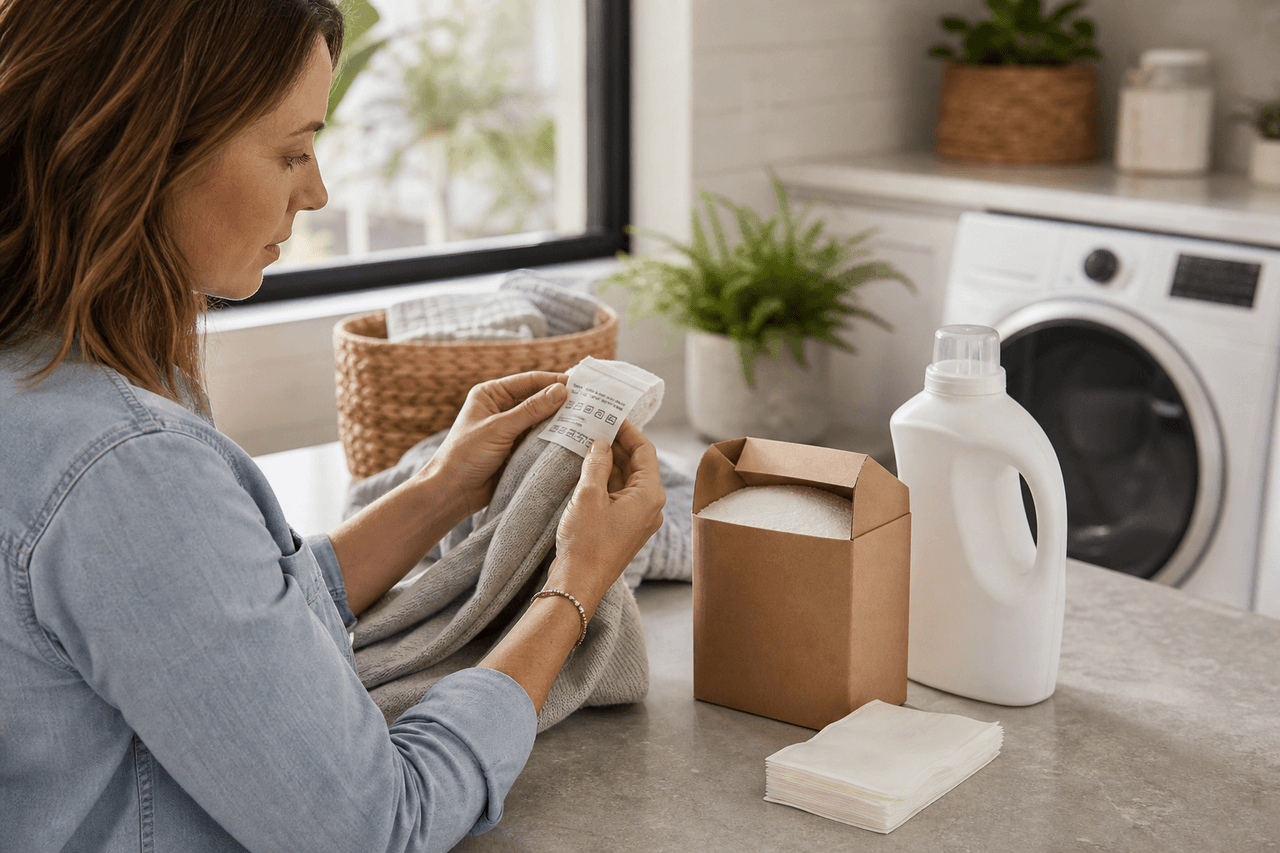
Biodegradable detergent can be a reasonable choice, but the word alone does not prove that a product is the most environmentally responsible option. Before buying, consider what is claimed to biodegrade, how the detergent is packaged, how concentrated it is, whether the claim is independently supported, and how the product should be used and disposed of.
This guide explains how to compare liquid detergent, boxed powder, and detergent strips without relying on vague green language. It also connects those decisions to practical laundry habits for Beaumont residents and to Beaumont Laundry’s stated focus on clean, fresh, and eco-friendly laundry solutions.
Quick summary
- “Biodegradable” is one product attribute, not a complete environmental assessment.
- Compare packaging, concentration, ingredients, dosing, storage, and disposal as separate questions.
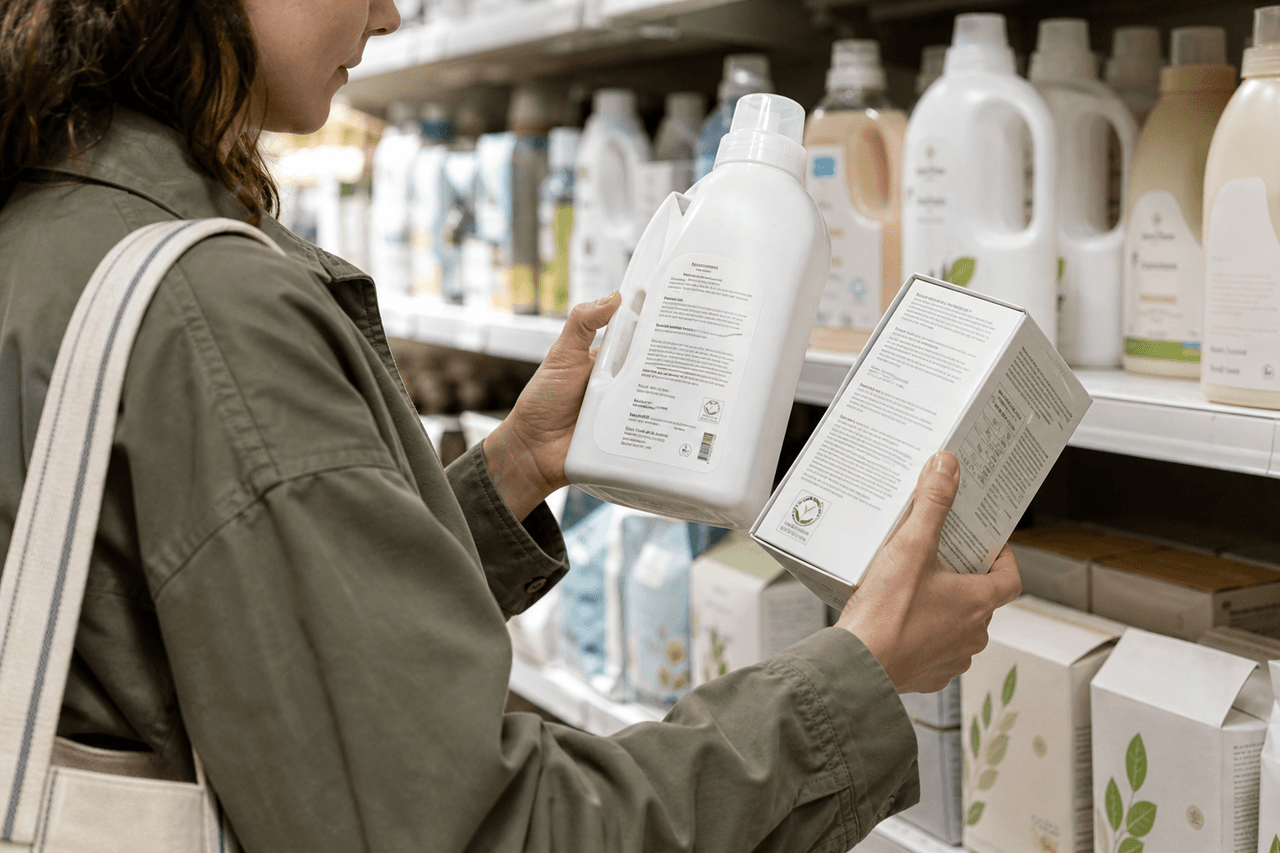
- Look for specific, independently supported environmental standards, such as UL ECOLOGO, rather than relying only on “green” or “natural”.
- Detergent strips and boxed powder may reduce reliance on plastic bottles, but neither format is automatically better in every category.
- Use the recommended amount and never pour hazardous materials into a laundry drain.
What does biodegradable detergent really mean?
Biodegradable generally means that a substance can be broken down by microorganisms under particular environmental conditions. That description is useful, but incomplete. It does not automatically tell you which ingredients break down, how quickly they do so, what conditions are required, or whether the entire product has been assessed.
When you see a biodegradable claim, ask three questions: what exactly is biodegradable, under what conditions, and what evidence supports the statement? A claim about one ingredient may not describe the packaging, fragrance, colourants, preservatives, or every other component in the product.
Biodegradability also does not automatically mean non-toxic, harmless to aquatic life, plastic-free, or superior in every environmental category. A detergent can have reduced packaging but require more product per load, or it can make a broad environmental claim without explaining the testing behind it.
That is why a useful biodegradable detergent guide should help you assess the whole purchase rather than identify a single “best” format. Canadian guidance also warns consumers to examine environmental labels and claims carefully, because broad or unsupported wording can create a misleading impression.
Look beyond the word “biodegradable”
Environmental impact involves several practical questions. Treat each one separately when comparing products:
- Packaging: Is the container made from plastic, cardboard, paper, or a combination? Can the packaging be reused or recycled through the facilities available to you?
- Concentration: How many loads does the package provide? A smaller container is not necessarily a lower-impact choice if it contains fewer washes.
- Ingredients: Does the manufacturer provide a clear ingredient list and useful information about fragrances, dyes, preservatives, and other additives?
- Evidence: Is the claim specific and independently supported, or is it mainly promotional language?
- Dosing: Can you measure the recommended amount accurately? Overdosing creates waste and can leave residue, while underdosing may not clean effectively.
- Suitability: Is the product appropriate for your washing machine, water conditions, fabric types, and the size or soil level of the load?
- Disposal: Are there clear instructions for the product, container, and any remaining concentrated detergent?
No single format wins every comparison. The better choice is usually the product whose claims are clearest, whose packaging fits your waste-reduction priorities, and whose instructions you can follow consistently.
Detergent strips, boxed powder, or liquid: comparing the main formats
Canadian government guidance identifies detergent strips and boxed laundry powder as alternatives to liquid detergent in plastic bottles for reducing plastic waste. That does not make either format universally superior, but it gives shoppers a useful starting point for comparing packaging.
| Format | Potential advantages | Questions to verify |
|---|---|---|
| Liquid detergent | Widely available, familiar, and easy to adjust for different load sizes when the measuring instructions are clear. | How much plastic packaging is used? How concentrated is it? Is over-pouring likely? Are environmental claims specific? |
| Boxed powder | Can reduce reliance on plastic bottles and may be convenient to store when kept dry. | How should it be measured? Does the box protect the product from moisture? What does the environmental claim actually cover? |
| Detergent strips | Lightweight, compact, and designed to provide a pre-measured or divided dose with less bulky packaging. | Are the strips and packaging genuinely plastic-free? What does “biodegradable” refer to? Is the dose suitable for your load and machine? |
Compare the number of washes, not just the size or weight of the package. A product that appears compact may not be efficient if it requires multiple portions for ordinary loads. Performance matters too: a product that cannot clean a load properly may lead to rewashing, which uses additional water, energy, and detergent.
Liquid detergent
Liquid detergent remains convenient because it is commonly available and can be measured for different load sizes. It may suit households that regularly adjust the amount for lightly soiled, heavily soiled, small, or large loads.
Its main environmental questions involve packaging, concentration, ingredients, and dosing. Check how many loads the container is intended to wash and use the supplied measurement markings rather than estimating by eye. Pouring extra detergent does not necessarily improve cleaning and can create avoidable waste or residue.
Boxed laundry powder
Boxed powder may appeal to shoppers who want to reduce their reliance on liquid detergent bottles. Keep it sealed and dry so it remains easy to measure and does not clump. Follow the product’s instructions for load size and soil level.
Do not treat cardboard packaging as proof that the product has a smaller environmental footprint in every respect. Read the product information, compare the number of loads, and check whether any claim applies to the formula, packaging, manufacturing process, or another specific feature.
Detergent strips
Detergent strips are compact and lightweight. Their format can reduce bulky packaging and make storage simple, while a divided strip may help some users avoid pouring too much detergent.
However, “strip” does not automatically mean plastic-free or fully biodegradable. Check what the strip is made from, what adhesives or packaging materials are included, and whether the manufacturer explains the testing behind its environmental claims. Also confirm the recommended amount for larger or heavily soiled loads.
How to assess labels and certifications
A broad phrase such as “eco-friendly” tells you less than a specific claim tied to a defined standard. Canadian consumer guidance explains that environmental labels can help identify products independently certified against environmental standards, including UL ECOLOGO as an example that may appear on cleaning products.
When you see a certification mark, look for the certifier’s name and confirm what the standard covers. A certification may address ingredients, packaging, life-cycle impacts, or other defined criteria. It should not be interpreted as proof that the product has no environmental impact.
Be cautious with claims that have no explanation or supporting information. Clear, limited wording is more useful than an impressive-sounding claim that leaves important details unanswered.
A practical biodegradable detergent buying checklist
- Identify the exact claim. Does “biodegradable” apply to the complete formula, particular ingredients, or a stated testing condition?
- Check the evidence. Is the claim explained and supported by a recognised, independent certification or standard?
- Compare wash counts. Look at the number of loads per package rather than package size alone.
- Review packaging. Note whether the container uses plastic, cardboard, paper, mixed materials, or additional inner wrapping.
- Review ingredients. Look for enough detail to understand fragrances, dyes, preservatives, and other relevant additives.
- Confirm the dose. Choose a product with instructions you can measure accurately for your usual load sizes.
- Check machine suitability. Follow the product and machine instructions, including any guidance for high-efficiency equipment.
- Plan storage and disposal. Keep powder dry, store concentrated products securely, and follow local instructions for containers and leftover detergent.
- Consider performance. A product that requires repeated washing may use more resources than one that works correctly at the recommended dose.
Use detergent responsibly after you buy it
Use only the recommended amount, avoid releasing concentrated product unnecessarily, and keep detergent away from children and pets. More detergent is not automatically more effective.
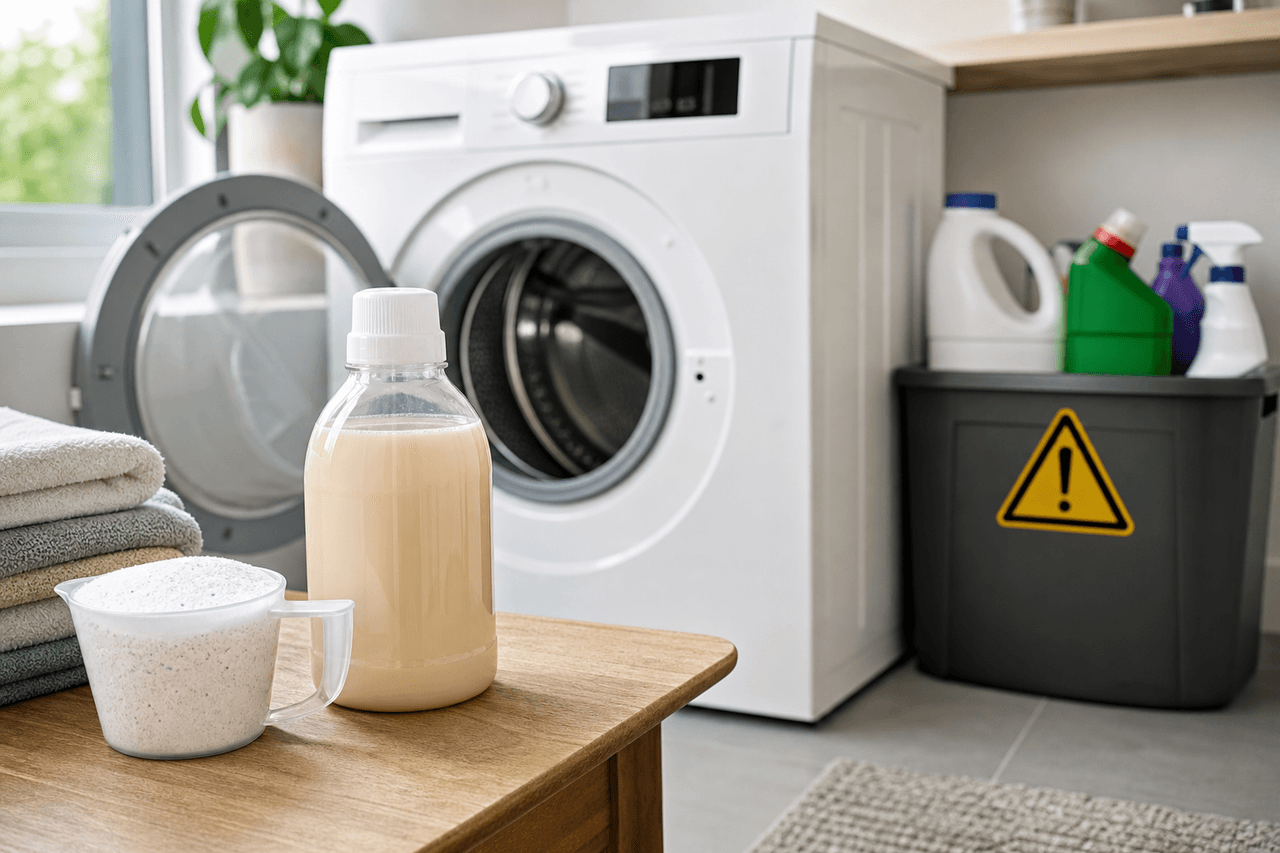
Alberta guidance advises residents to prevent hazardous materials from being flushed down drains because they can eventually reach the aquatic environment. Do not pour solvents, fuels, pesticides, automotive fluids, or other hazardous materials into a laundry drain. Follow the product label and local disposal guidance.
If you are handling cleaning products as part of a broader sanitation routine, cleanable equipment and sanitation practices illustrate the same principle: use suitable products for their intended purpose and manage them carefully.
Applying the guidance in Beaumont
For Beaumont residents searching for an eco-friendly laundry detergent or a local laundry service, ask what environmental claim is being made, what evidence supports it, how the product is packaged, and whether dosing and disposal instructions are clear.
Beaumont Laundry is a locally owned and operated laundry service in Beaumont, Alberta. Its website states that the business focuses on clean, fresh, and eco-friendly laundry solutions and that its experienced team is focused on customer service and satisfaction.
That positioning does not establish that Beaumont Laundry uses a particular detergent format, brand, certification, or packaging system. If a specific product or environmental process matters to you, ask the business directly before making that assumption.
Frequently asked questions
Is biodegradable detergent automatically better for the environment?
No. Biodegradability is one consideration. Packaging, concentration, ingredients, certification, dosing, cleaning performance, and disposal also affect the decision.
Are detergent strips plastic-free and fully biodegradable?
Not automatically. Check the material used for the strip, wrapper, box, and inner packaging. Review the manufacturer’s evidence and determine exactly what the claim covers.
What certification should I look for?
Look for a recognised, independent certification that explains the standard and criteria assessed. UL ECOLOGO is one example identified in Canadian consumer guidance.
Is boxed powder more environmentally responsible than liquid detergent?
It may reduce reliance on plastic bottles, but the complete comparison depends on wash count, formula, packaging, dosing, and performance.
How much detergent should I use?
Use the amount specified on the product label for your load size and soil level. Measure rather than guessing.
What should never be poured down a laundry drain?
Do not pour solvents, fuels, pesticides, automotive fluids, or other chemicals not intended for wastewater disposal down the drain. Follow local disposal guidance.
Choose the detergent with the clearest evidence
The best biodegradable detergent decision is not based on one attractive word on the label. Compare the specific environmental claim, independent certification, packaging, concentration, ingredients, dose, machine suitability, and disposal instructions.
Liquid detergent, boxed powder, and strips each have practical strengths and limitations. The most responsible option may be the one with the clearest evidence, appropriate packaging, reliable performance, and instructions you can follow without overusing the product.
For local laundry support in Beaumont, Beaumont Laundry is a locally owned and operated laundry service focused on clean, fresh, and eco-friendly laundry solutions.
- Self-service laundromat
- biodegradable
- detergent
- guide