

Eco-friendly laundry is less about finding one perfect product and more about making a series of practical choices. Wash at a lower temperature when the care label and soil level allow it, avoid unnecessary loads, keep clothing in use longer, and examine the equipment, transport, detergent, and packaging involved in any professional service.
No option is automatically greener in every situation. Home laundry, self-service laundry, drop-off wash-dry-fold, and pickup service each have different tradeoffs. The best choice depends on your load size, travel distance, drying method, convenience needs, and the provider's actual operating practices. Natural Resources Canada explains how to make laundry more energy efficient.
Quick summary
- Use cold or lower-temperature water when the garment label and level of soiling make it appropriate.
- Wash full loads without overloading the machine, and avoid re-washing clothes unnecessarily.
- Reduce microfibre release and extend garment life by washing less often when appropriate and choosing gentler care.
- Compare professional laundry services by equipment, drying, detergent, packaging, transport, and transparency, not just by the word “eco-friendly.”
- Beaumont Laundry offers self-service laundry, drop-off wash-dry-fold, ironing, and pickup options for Beaumont residents.
The highest-impact eco-friendly laundry habits
Start with the choices that affect the most laundry cycles: temperature, load size, drying, and garment lifespan. Small decisions about detergent and packaging matter too, but they should complement efficient washing rather than distract from it.
Use cold water when the garment and soil level allow it
Heating water is a significant part of the energy used by a washing machine. Cold-water washing can therefore lower energy use compared with hot washing, particularly for everyday loads that are not heavily soiled. ENERGY STAR also notes that cold water will generally clean effectively unless you are dealing with oily stains, while Natural Resources Canada recommends washing in cold water where possible.
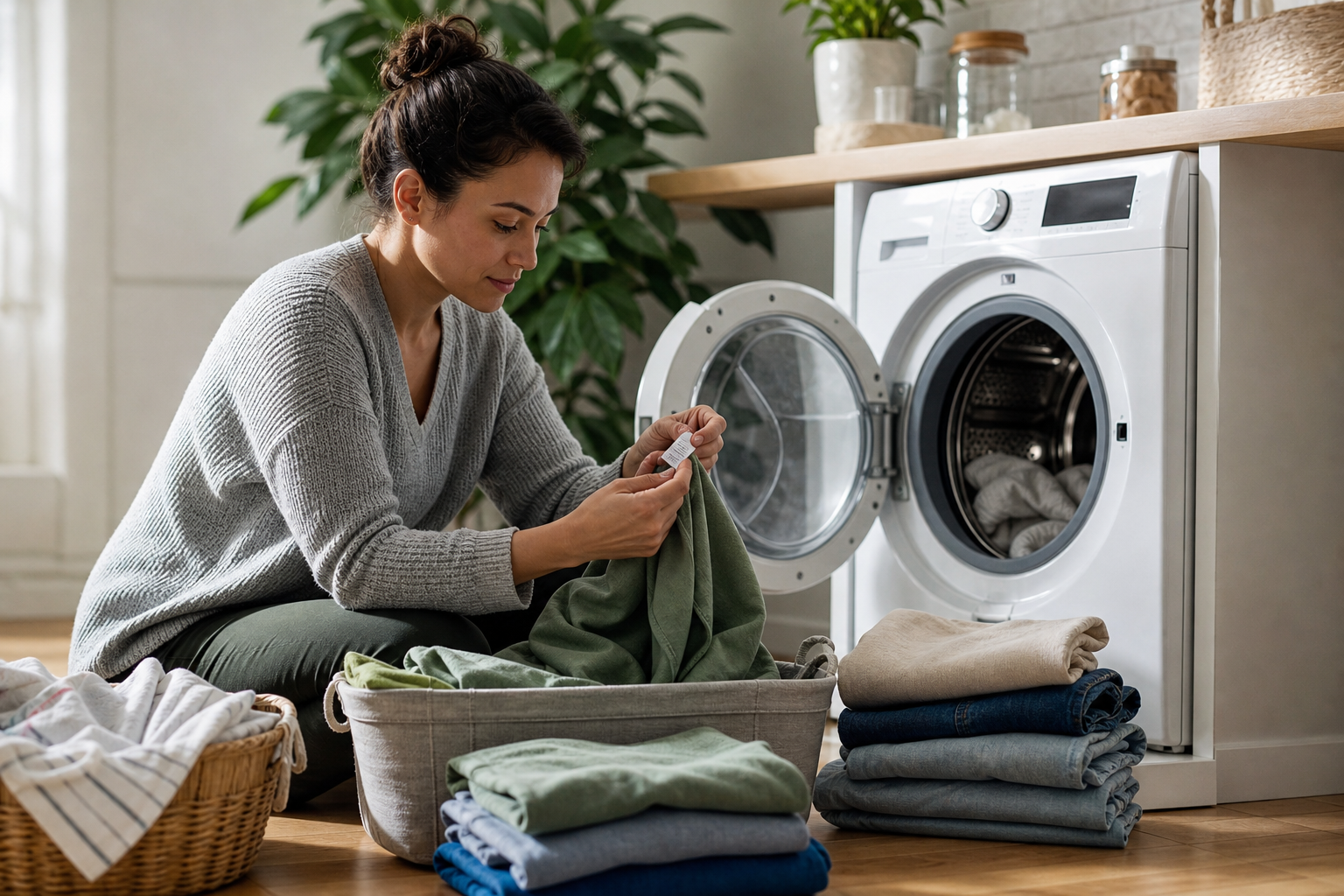
Cold water is not a universal solution for every item. Read the care label, pre-treat visible stains, and choose a warmer setting when the fabric, soil level, or care instructions call for it. Do not assume that cold water removes every allergen, pathogen, pest, or difficult stain. The aim is to avoid unnecessary heat while still washing responsibly.
Run sensible loads and keep clothes in use longer
A properly filled load can help you avoid running several partly empty cycles. However, a full drum is not the same as an overloaded drum. Clothes need room to move through water and detergent, so follow the machine's capacity guidance and leave enough space for effective cleaning.
Washing less frequently can also reduce resource use when the item is only lightly worn and does not need a full wash. Airing clothing, spot-treating marks, and following the care label may help you delay a cycle. When you do wash, sorting carefully, using an appropriate cycle, and removing clothes promptly after drying can support longer garment life and reduce the need for repeat washing.
Manage drying deliberately
Drying can be one of the most energy-intensive parts of laundry, so avoid running a dryer longer than necessary. Use the correct load size, do not mix items with very different drying requirements when that creates an inefficient cycle, and consider air-drying suitable garments. For items that need a dryer, removing them promptly can help reduce unnecessary tumbling and heat.
Reduce microfibre release and detergent packaging

The Government of Canada recommends washing clothes in colder water and washing less frequently to help reduce microfibre shedding, extend clothing life, and save water and energy. Those habits are useful starting points, especially for synthetic garments that may release small fibres during washing. Canada's guidance on reducing everyday plastic pollution explains this connection.
Choose a washing routine that avoids unnecessary agitation and repeat cycles. Wash delicate or synthetic items according to their care instructions, and consider whether an item genuinely needs washing after each wear. If you use a specialised fibre-catching product, treat it as an additional measure rather than a reason to wash more often.
Detergent choices also deserve scrutiny. Compare the recommended dose, concentration, ingredients, and packaging rather than assuming that a product is environmentally preferable because its label says “green” or “natural.” Canadian federal information explains that limits on phosphorus in certain cleaning products are intended to help protect aquatic ecosystems from excess nutrient pollution. Information about Canada's phosphorus limits for cleaning products provides relevant context.
Look for specific, verifiable information about a product or service. A clear explanation of dosage, packaging, ingredients, or waste handling is more useful than a broad environmental promise with no supporting detail.
Which laundry option has the lowest practical impact?
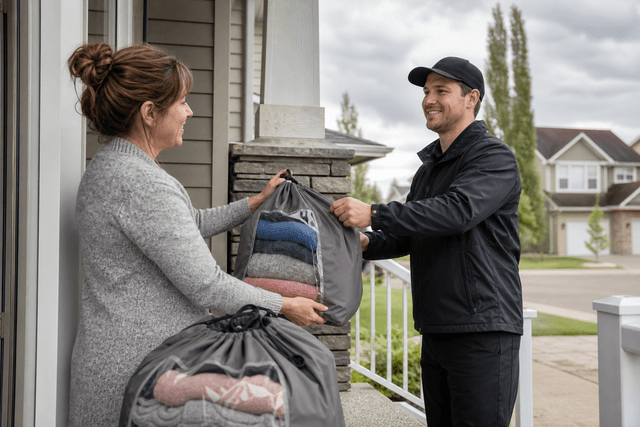
Choosing between home laundry and a professional provider is a practical calculation, not a simple ranking. A nearby laundromat may reduce the number of household cycles for a large load, but transportation and drying still matter. A pickup service saves time, yet adds collection and delivery travel. Drop-off service may suit a busy household, but you should ask how laundry is sorted, dried, packaged, and returned.
For a fair comparison, consider the complete laundry journey: how far you travel, how full the machine is, the equipment's efficiency, the wash temperature, the drying method, detergent dosage, packaging, and whether the service causes extra handling or repeat washing.
Home, self-service, drop-off, or pickup: a practical comparison
| Option | Useful when | Environmental questions to ask |
|---|---|---|
| Home laundry | You have suitable equipment and enough time to combine loads efficiently. | Can you use a lower temperature, avoid overloading, reduce drying time, and air-dry suitable items? |
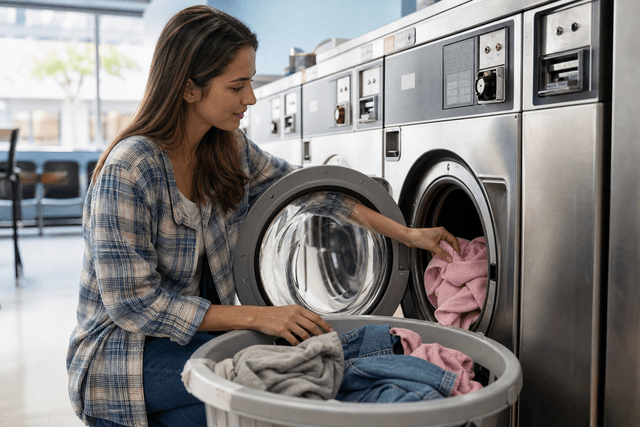
| Self-service laundry | You need a larger capacity or want to manage washing and drying yourself. | What load sizes are available? Can you travel there efficiently? Which temperature and drying settings can you control? |
| Drop-off wash-dry-fold | You want to delegate the complete washing, drying, and folding process. | How are loads handled, what detergent and dosage are used, how is clothing packaged, and are special care instructions accepted? |
| Pickup service | You need laundry collected and returned because time or mobility is limited. | What travel is involved, how are pickup routes managed, and what packaging or delivery arrangements are used? |
Beaumont Laundry describes itself as a locally owned and operated Beaumont, Alberta laundromat that provides clean, fresh, and eco-friendly laundry solutions. That positioning is useful context, but it does not by itself verify particular machines, detergents, packaging, certifications, or measured environmental results. Ask for the specific practices that matter to your decision.
Match Beaumont self-service load sizes to your laundry needs
If you prefer to control the process, Beaumont Laundry publishes three self-service load options: a 20 lb capacity for $5.50, a 30 lb capacity for $7.50, and a 40 lb capacity for $10.00. These prices and capacities can help you compare the cost of using an appropriately sized machine with the cost and effort of handling the same load at home. They are not proof of a particular water or energy saving.
Select a capacity that fits the load without forcing clothes into an overfilled drum. Splitting an unnecessarily large load may create extra cycles, while overloading can lead to poor cleaning and re-washing. For current details, review the published self-service laundry pricing.
Checklist for choosing an eco-friendly laundry provider
Before booking a laundry service or accepting a broad green claim, ask questions that produce concrete answers:
- Equipment: Are machines selected or maintained for efficient operation? Are capacities clearly stated?
- Temperatures: Can you request cold or lower-temperature washing when suitable for the garments?
- Load handling: Are loads kept at a sensible size, and are garments sorted according to care requirements?
- Drying: How are drying times managed, and are air-drying or lower-heat options available for suitable items?
- Detergent: What product is used, how is it dosed, and is the explanation more specific than a general “green” label?
- Packaging: How are clean clothes packaged, and can unnecessary packaging be avoided?
- Transportation: For pickup and delivery, how are routes and collection arrangements handled?
- Evidence: Can the provider separate verified practices from aspirations or unmeasured environmental benefits?
This evidence-first approach is useful for other household services too. When comparing environmental claims, look for specific practices rather than relying on a broad label, whether you are evaluating laundry or greener junk removal options.
A practical next step for Beaumont households
Your best option depends on the problem you are solving. Self-service laundry gives you control over load selection and settings. Drop-off wash-dry-fold is useful when you want someone else to handle the washing, drying, and folding. Pickup service adds collection and return convenience, while ironing is intended for clothing that needs pressing rather than a complete wash routine.
Beaumont Laundry's services page lists self-service laundry, ironing, drop-off wash-dry-fold, and pickup service. Its published drop-off price is $2.50 per pound for regular clothes only, so confirm the current terms and suitability of your items before arranging service. You can also ask which washing, drying, detergent, and packaging practices are available for your specific load.
Frequently asked questions
Is cold-water washing always the most eco-friendly choice?
No. Cold water can reduce the energy used to heat water, but the right setting also depends on the garment, soil level, and care label. Use warmer water when it is appropriate for the item or cleaning task rather than treating cold water as a guarantee of complete cleaning.
Can using a laundromat be more sustainable than washing at home?
Sometimes, but there is no universal answer. Load size, machine efficiency, drying, travel, and operating practices all affect the comparison. A nearby self-service visit with a well-matched full load may suit your routine, while home washing may be preferable when travel would add unnecessary impact.
What should I ask a laundry service before trusting an eco-friendly claim?
Ask about machine capacities, wash temperatures, drying practices, detergent dosage and ingredients, packaging, pickup travel, and how the provider supports its environmental statements. Specific answers are more useful than an unqualified claim that the service is green.
Does Beaumont Laundry offer wash, dry, fold, and pickup services?
Yes. The business lists drop-off wash-dry-fold service and pickup service, as well as self-service laundry and ironing. Confirm availability, handling instructions, and current terms directly before arranging a load.
What self-service load sizes and prices does Beaumont Laundry publish?
The published options are 20 lb for $5.50, 30 lb for $7.50, and 40 lb for $10.00. Choose a capacity that fits the load without overfilling the machine, and check the pricing page for current information.
Choose the lower-impact routine you can maintain
The most practical eco-friendly laundry routine usually starts with lower-temperature washing where appropriate, sensible full loads, careful drying, and keeping clothes in use longer. Then consider detergent dosage, packaging, and microfibre reduction. When comparing a provider, examine the full process rather than assuming that a laundromat, home machine, drop-off service, or pickup option is automatically the greener choice.
For Beaumont residents, the decision can be matched to the load and the time available: manage a suitable load through self-service, delegate washing and folding, arrange pickup, or use ironing for garments that need pressing. Beaumont Laundry is a locally owned and operated laundry business in Beaumont, Alberta. To review its available laundry options and ask questions about your needs, visit Beaumont Laundry.
- Self-service laundromat
- eco-friendly
- laundry